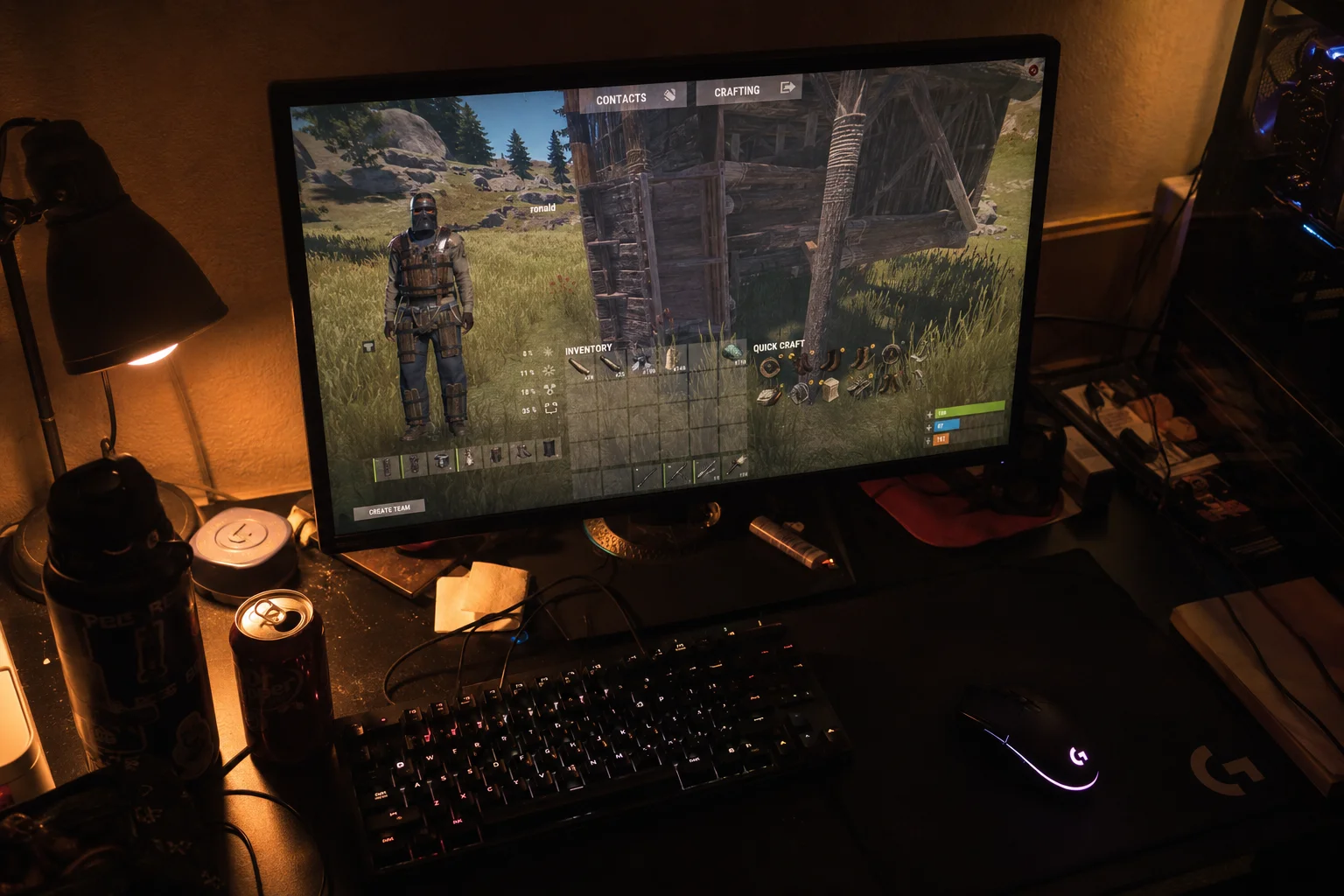
You join a Rust server on day two of the wipe. You spend three hours farming stone and wood, build a starter base, and finally craft a bow. Then a neighbour walks past in full metal armour carrying an AK, and the server chat confirms he bought a VIP kit at spawn. That feeling, the one where the whole session suddenly feels pointless, is the clearest sign of a broken server economy.
The problem is not that Rust is a hard game. The problem is that many public and semi-public rust servers treat economy as an afterthought, bolting on donation perks and custom loot tables without thinking about how those decisions interact. When the economy feels rigged, players leave before the wipe ends, the server population collapses, and the admin wonders why retention is poor. Finding rust servers where the economy actually holds together is harder than it should be, which is exactly why we built a place to list and discover community servers that take these decisions seriously.
Gather Rates Set the Tone for the Entire Wipe
The single biggest lever an admin controls is the gather rate multiplier, because it determines how quickly players move from rags to rifles. On a vanilla server, the progression from rock to semi-automatic rifle takes meaningful time. That gap creates conflict, and conflict is the whole game. When gather rates climb too high, everyone reaches endgame gear within hours, the mid-game economy collapses, and the wipe feels finished before it has started.
The counter-argument is that high rates attract players with limited time. That is fair, but the solution is not simply to multiply everything by ten. Servers that handle this well tend to apply different multipliers to different resource categories. Stone and wood might gather faster to reduce the tedious early grind, while sulphur and high-quality metal stay closer to vanilla rates to preserve the value of ammunition and weapons. For example, a server running two times wood and stone but one times sulphur keeps early building accessible without flooding the economy with rockets on day one.
The practical test: if a solo player can comfortably research and produce an AK within the first evening of a wipe, the gather rate is probably too generous for a healthy mid-wipe economy.
Loot Table Design Determines Whether Skill or Luck Wins
Loot tables are where many rust servers quietly break their own economy. When high-tier weapons appear too frequently in basic barrels, the research and crafting system loses its purpose. Players stop trading components because everyone already has what they need. The market, whether that is a formal in-game shop plugin or simple player-to-player trading, dries up.
Well-designed loot tables do two things. First, they keep the chance of finding a top-tier weapon in a roadside crate genuinely rare, so that crafting remains the primary path to endgame gear. Second, they ensure components, scrap, and mid-tier items are plentiful enough that players feel rewarded for looping monuments without feeling like they have already won the wipe from a single run.
Custom loot plugins like AlphaLoot and LootPlus give admins granular control over spawn chances, and the servers that use them thoughtfully show it in their player retention. For example, a server might set the chance of an AK spawning in a military crate at a very low percentage while increasing the frequency of rifle bodies and metal springs so that crafting one feels achievable but earned. The distinction matters enormously to how the wipe feels across its full duration.
Servers that rely on default Facepunch loot tables are not automatically bad, but they are at the mercy of whatever Facepunch decided that month. Community-run servers listed on a dedicated directory tend to have admins who have thought carefully about these settings, because those admins built the server for a specific kind of player experience rather than simply hosting the default configuration.
Wipe Cycles and Blueprints Define Whether Progression Feels Meaningful
Rust wipes are the game’s reset mechanism, and the frequency of those wipes shapes the entire social contract of a server. Wipe too often and players never get to enjoy the fruits of their progression. Wipe too rarely and the server stratifies into established groups that newer players cannot challenge, which kills population just as effectively.
The blueprint wipe question is particularly important. Some rust servers wipe the map every two weeks but keep blueprints across wipes, which rewards long-term players and creates a meaningful skill gap between veterans and newcomers. Others wipe everything, maps and blueprints together, which resets the playing field completely. Neither approach is universally correct; the right choice depends on the community the admin is trying to build.
Solo and duo servers tend to favour shorter wipe cycles, often weekly, because smaller groups progress more slowly and a long wipe can leave them permanently behind larger teams. Group-size-limited servers with a cap of four or six players often run fortnightly wipes with blueprint wipes included, because that timeline gives small groups enough runway to reach and enjoy late-game content before the reset. Knowing the wipe schedule before you join is one of the most practical pieces of information a server listing can provide, and it is one of the fields we prioritise at List My Server.
Donation Perks and Pay-to-Win: Where Most Servers Get It Wrong
This is the conversation most server admins would rather avoid, but it is the one that matters most to players. Running a Rust server costs real money, covering hosting, plugins, and admin time. Donation systems exist because servers need revenue. The question is not whether to have a donation shop; it is what that shop sells.
Perks that do not affect gameplay balance are broadly accepted by the community. Cosmetic items, coloured names, access to a lounge Discord channel, priority queue slots: these generate revenue without distorting the economy. The moment a donation tier includes a starter kit with a weapon, armour, or a significant quantity of resources, the server has introduced a structural inequality that no amount of careful loot table design can fix.
The damage is not just to individual sessions. When players know that some participants bought their way to an advantage, the entire risk-reward calculation changes. Raiding someone’s base carries less satisfaction if you suspect their gear came from a shop rather than earned progression. The social fabric of the server, the alliances, the betrayals, the tense standoffs at the gas station, all of it depends on players believing the rules are the same for everyone.
Community-run servers that explicitly advertise as non-pay-to-win are worth seeking out, because the admin has made a deliberate choice to prioritise the player experience over short-term donation revenue. Those servers tend to fund themselves through flat monthly supporter tiers or Patreon-style contributions that offer recognition without gameplay advantage. Finding them used to require trawling through forum posts and Discord servers. A well-organised rust servers list makes that search considerably faster.
What You Can Do This Week to Find a Server Worth Your Time
If your current server feels economically broken, the fix is not to grind harder. The fix is to find a server where the admin has made considered decisions about the settings above. Here is a practical approach you can complete before your next session.
- Search specifically for servers that publish their gather rates, loot table approach, wipe schedule, and donation policy in their listing or server description. Admins who hide these details are usually hiding something unflattering.
- Check the server’s wipe history. A server that has run consistent fortnightly wipes for several months has demonstrated stability. A server that wiped three times in one month is experimenting at your expense.
- Look at peak and off-peak population numbers. A server with a strong peak but very low off-peak numbers often has an economy that only works for the first few days of a wipe, after which the active player base drops sharply.
- Ask in the server’s Discord before joining. Healthy server communities answer questions about economy settings quickly and without defensiveness. Admins who are proud of their configuration are happy to explain it.
Browsing List My Server gives you a starting point where server owners list their configuration details alongside their community information, so you spend less time server-hopping and more time actually playing. If you run a Rust server with a fair economy and want players who will appreciate the effort you have put into the settings, listing your server there puts you in front of the audience that is actively looking for exactly what you have built.
The best rust servers are not the ones with the most players or the flashiest Discord. They are the ones where, three days into a wipe, you still feel like your decisions matter and your effort has meaning. That feeling is entirely a product of economy design, and now you know what to look for.